This service is not open yet. It will open gradually, starting with a pilot programme.
For rescue services and hospital emergency departments
The patient's essentials, at the time of the intervention.
A dedicated app for rescuers of an approved organisation: patient identification, mandatory reason, then a clear, read-only vital sheet. Every access is logged.
On the team side
Designed for the field.
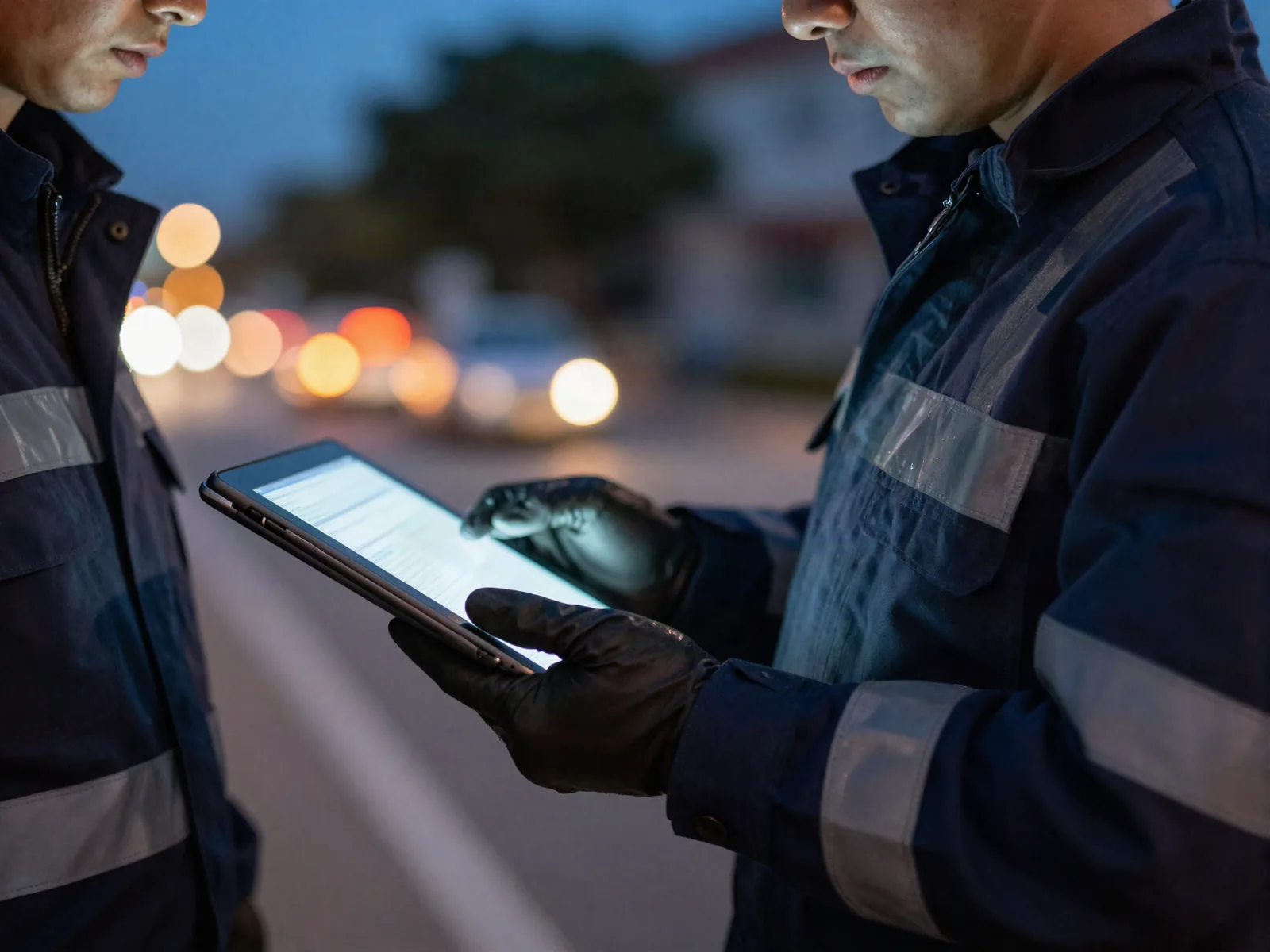
A dedicated app, easy to use on a tablet, where every step protects the patient.
Identify
Scan the QR of the patient's emergency card, or enter their exact identity if the patient allowed it.
Confirm
Identification proposes a candidate. The rescuer confirms it and states the reason: this is mandatory.
Read
Read-only vital sheet, critical allergies first, then conditions, treatments, blood type, note for rescuers, contacts, family doctor, directives, organ donation.
Finish
The sheet closes after a limited time or when the team ends the intervention. The app locks after a period of inactivity.
What the team does
Finding the right person, before opening anything.
Depending on the person's state, the team asks them or looks for what they carry.
The person is conscious
They can say who they are or show their card.
Scan the emergency card QR
Printed card, or the QR shown on the patient's phone.
Search by exact identity
Exact first name, last name and date of birth, only if the patient allowed this search.
The person is unconscious or cannot answer
The rescuer looks for what they carry.
Emergency card QR
In the wallet or the phone case, if the patient slipped it there.
NFC + QR wristband or card
Coming soonReadable in one gesture. In preparation, not available yet.
Identity papers
Without a QR, if papers are found: search by exact identity, only if the patient allowed it.
In both cases, three safeguards
- The rescuer confirms it is the right person before opening the sheet.
- They state the reason for the intervention.
- The access is logged and the patient is informed.
If the person has switched nothing on, or is not found, the app shows nothing: rescuers then work as they do today.
Under studyIdentification by facial recognition, for people who have expressly accepted it. It is not available and will only be after its reliability and the necessary authorisations have been validated. It would never replace the rescuer's check.
Organisation authorisation
Nobody self-declares as a rescuer.
Each organisation is reviewed and approved by My Data My Care before its agents can sign in.
1. Application
The organisation writes to us to take part in the pilot programme.
2. Approval
My Data My Care reviews the organisation and signs an agreement with it.
3. Inviting agents
The organisation's manager invites its agents. Each signs in with a password and a one-time code.
4. Suspension possible
My Data My Care can suspend an agent or an organisation. Their sessions are then closed.
Traceability
An access must be justified.
The reason is mandatory. The service is designed to write every opening of a sheet to a tamper-proof log before the data is displayed: if the write fails, the sheet does not open. The patient is notified and can report an access.
A shared record
One patient record, shared across the medical team.
Your health passport remains the starting point. You keep it up to date, and each professional accesses it according to what you have authorised. One source, rather than one sheet per department.
Your family doctor
They follow your record day to day. If they are registered on My Data My Care, they will be notified in the app when rescuers view your sheet.
Rescuers
A read-only vital sheet for the duration of the intervention, with only the sections you will have chosen.
Hospital emergency departments
An enriched sheet and a handover between the rescue team and the hospital, so the same questions are not asked twice.
Already available in your passport: the emergency card with QR code, import of your documents and lab results, with automatic reading of their key data.
What is coming
What comes next, announced as it is: in preparation.
None of the following is available today. Each item is in preparation, with no announced date.
- Coming soon
NFC + QR wristband and card
Your emergency identifier on a wristband or a card, readable by a rescuer in one gesture.
- Coming soon
Mobile app for rescuers
A native app, alongside today's dedicated application.
- Coming soon
Hospital emergency mode
An enriched sheet and a handover between rescue teams and the hospital.
Pilot programme
A launch in stages.
Opening is gradual. Access is free for rescue organisations. Applicant organisations are reviewed one by one.
Patients choose for themselves to switch the module on: an organisation will only see the sheets of people who decided so.
Frequently asked questions
Your questions, our answers.
Who can apply?
Rescue and emergency organisations: fire services, ambulance services, emergency departments. Each organisation is reviewed and approved by My Data My Care before being authorised. Nobody can self-declare.
Is it paid for an organisation?
Access is free for rescue organisations.
How is a mistaken identity avoided?
Every identification first produces a candidate. The rescuer confirms it and states the reason, and only then does the sheet open.
And without the app?
The QR on the emergency card remains readable with any phone, and gives limited access to the information the patient chose: blood type, allergies, current treatments, person to contact.
What happens without a network?
The app says so clearly. The sheet does not open offline: no health data is kept on the device.
Another question? Write to us
Does your organisation want to take part? Write to us.
We are opening the pilot programme gradually, with organisations that we approve one by one. Access is free for rescue organisations.
Your application goes through the My Data My Care contact form.